
Jon Liedtke joins 610 CKTB’s Gene Valaitis for his regular weekly segment, Liedtke’s Got a Take!
During his Liedtke’s Got a Take segment with Gene Valaitis, Jon Liedtke discusses an open-source developer who used AI to build free clones of popular software from ADOBE and MICROSOFT. Liedtke argues that replicating software functionality isn’t IP theft or piracy, predicting this shift could disrupt the subscription-based software model for big tech.
Transcript (Gemini Generated):
Here is the full word-for-word transcript of the audio clip:
Gene Valaitis: It is time for Liedtke’s Got a Take. Good morning, Jon.
Jon Liedtke: Good morning, Gene.
Gene Valaitis: Well, this is a fantastic take you have this morning. I’m calling it the Napster of 2026. An open-source developer just used artificial intelligence to create, I guess we could call it a mimic of Microsoft Office programs like Word, Excel, PowerPoint, even Adobe products. And he’s giving them away totally free. Yikes! Now, is this the ultimate victory for consumers sick and tired of monthly subscription fees? Or is this just plain digital piracy with a very slick artificial intelligence coat of paint?
Jon Liedtke: Calling this piracy completely misses the mark about how code actually works. I mean, they didn’t break—he didn’t break into Adobe headquarters wearing a black turtleneck and a mask at 3:00 AM to steal source code and copy it onto a thumb drive. He described what the program does, and the AI generated functions that replicate that. And now, listen, I’m not a lawyer, and I’m certainly not an IP lawyer, and I’m sure that in Silicon Valley, there’s entire firms right now that are putting down payments on new summer homes because of this. But functionally, recreating utility is not theft. I mean, Maytag can’t sue Whirlpool because Whirlpool built a cold metal box that stops your milk from spoiling. That’s a refrigerator. Writing code that makes things bold, or that can change the color of a photo or crop it, isn’t piracy. That’s just manufacturing a new product.
Gene Valaitis: Yeah. Well, you know, it’s interesting that you’re talking about this, because when I learned about it, I was licking my chops because I just had to do my yearly subscription to Microsoft Office programs a couple of weeks ago. Now, you know, I was on the air here been calling it the Napster parallel. So, when Napster hit back back in ’99, it shattered the music industry’s business model overnight. So, are we looking at software’s Napster moment here, where a single guy with an AI prompt can make a multi-billion dollar tech suite pretty well obsolete in a weekend?
Jon Liedtke: I think it’s looking like that, yeah. AI is showing that it can vaporize legacy software IP in that afternoon or a weekend, and I think that the tech boardrooms should be sweating through their fleece vests right now in Silicon Valley. I mean, how do you legally ban someone from recreating a drop-down menu, Gene? I mean, it’s like telling an artist they can’t paint the CN Tower because someone else painted it from the exact same angle in 1982. I mean, theft is not happening here, just mimicry. And as the old saying goes, though, I mean, mimicry is the highest form of flattery.
Gene Valaitis: Yeah. Well, these AI apps aren’t exactly 100% as polished as the real deal, but they work! And for small business owners, people like me, you know, that could trim your monthly bill down substantially. Now, isn’t 80% functionality for $0 a good tradeoff for the millions and millions of people who are going to take a look at this?
Jon Liedtke: Oh, without question, Gene, absolutely. I spoke with a friend of mine yesterday, a professional photographer who works with, you know, really high-end clients, and he downloaded the open-source AI clones, ran a batch, and he said, “Man, it works well enough, Jon, and I don’t have to pay for things anymore.” So, you know, download it if you want it before it gets taken off of the repositories that it’s on right now online. But when a seasoned professional says “good enough for $0,” that’s a catastrophic problem for Adobe or for Microsoft Office. Why pay $60 a month or whatever it is in perpetuity when you can pay nothing today? And corporate law firms aren’t going to switch because they need enterprise entities to be able to sue when a server goes down or something. But for small businesses, freelancers, students, they didn’t—they won’t just jump ship. They’re—they’re on the shore watching the corporate boat sink itself. Um, and, you know, quite frankly, I—it’s been brought on by them. The reason that the person made this AI app was because he went to cancel his Adobe subscription, and they charged him a cancellation fee because he was doing it early. So it was an early termination fee, and he just—he got fed up and mad. And so here we are, he decided to break a multi-billion dollar industry because he got pissed off.
Gene Valaitis: Hm. Well, listen, if an individual developer can use AI to replicate really about 30 years of Microsoft engineering, I’m wondering what Big Tech does next. Do they send in the lawyers, or do they put everything behind a paywall?
Jon Liedtke: You know, they’ll send the lawyers, they’ll build the paywalls, and then they’ll hit a real wall when they prove that both are entirely ineffective. At some point, you actually have to compete by engineering a superior product rather than just locking the digital exit doors. And we used to rely on the classic tech axiom that if the product is free, you are the product. But that playbook is shredded. This code will run on your hard drive offline for free, and it’s customized for you in some cases, is what they’re talking about. So executives should be having existential crises right now in boardrooms trying to figure out how marketing and sales teams can possibly compete with “It’s free, it’s yours, and it doesn’t phone home to charge your credit card.”
Gene Valaitis: Yeah. You know, if you look at the big picture, is paying a monthly software fee like rent, I guess we could say, is it officially dead now?
Jon Liedtke: Uh, I sure hope so, Gene. The—the SaaS model, S-A-A-S, software as a service, that’s an unholy, anti-consumer extractivism project from the start. I mean, I miss the era where you went to the store, you bought a physical box, you took out a shiny plastic disc, or gosh, I say, you know, floppy disk in some cases, I’m old enough to remember those, installed it, and you owned the software until the sun went dark and the universe was gone. It was yours, though. I want this AI wave to trigger massive, furious consumer revolts that destroys recurring subscriptions everywhere across our markets, not just for software. I want car manufacturers trying to charge a $15 monthly recurring fee to unlock your heated seats that are already wired into the vehicle you paid for—
Gene Valaitis: I know, I know! That’s crazy!
Jon Liedtke: It’s nuts! So if I buy something, Gene, it’s simple. It should belong to me entirely, in perpetuity, and I can do what I want with it, and it should not be tethered to a corporate spreadsheet that tracks my usage for billing.
Gene Valaitis: All right. Final question here on your take this morning. Are we heading towards a future where we just say to heck with software packages, “I’m not going to buy it, I’m just going to ask AI to build whatever I need“?
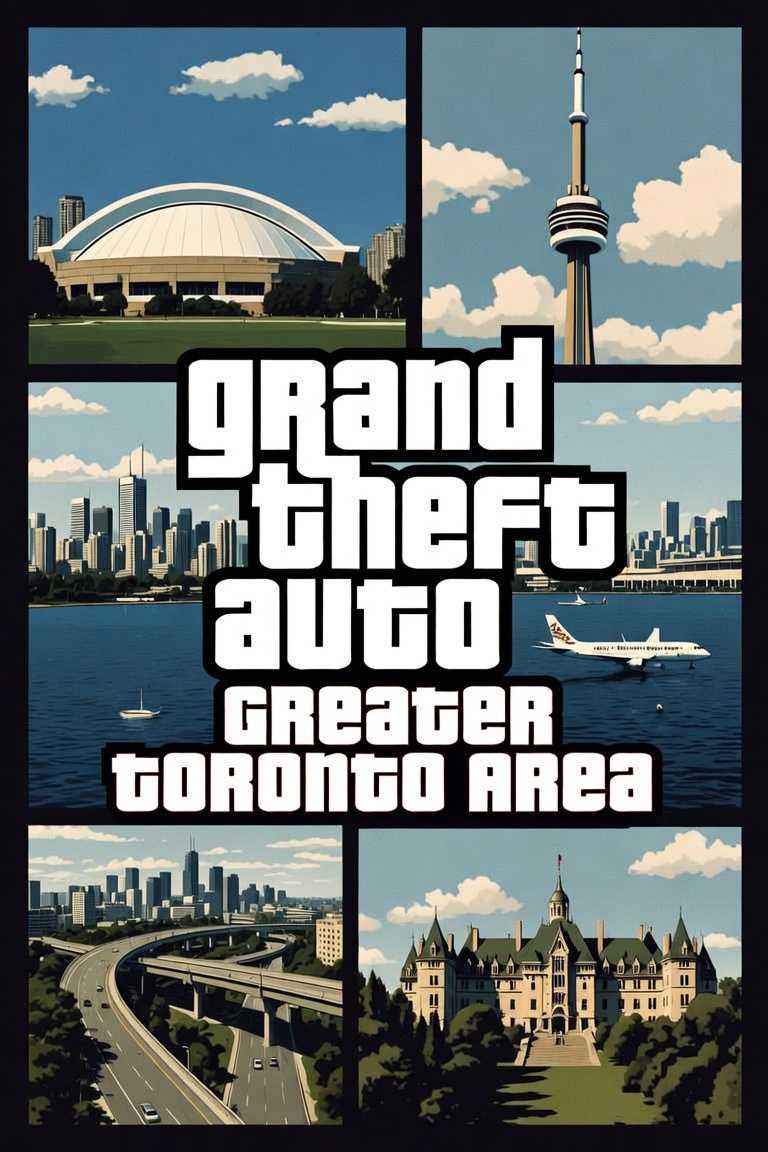
Jon Liedtke: Yeah, I think so. You know, there was a tech founder who recently tweeted a joke about prompting AI to decompile the new Grand Theft Auto game that’s coming out. And to me, that’s the ultimate dream. I’ve wanted to play Grand Theft Auto, GTA: Greater Toronto Area my whole life. Just three straight hours of sitting completely motionless in bumper-to-bumper construction traffic near Milton in a stolen 2008 Honda Civic. I mean, what—what more could you ask for in a game, Gene? But listen, on a serious note, whether it’s hyper-specific cross-border tax calculators or a trimmed-down version of Photoshop stripped of the 900 features that you don’t need, on-demand custom utility is where this is heading. And unlike scraping copyrighted books or music to train the LLMs that we’ve talked about before with AI, having functional code written that performs like existing code, it’s not IP theft. It’s—I mean, software is supposed to serve the user, not sit in your banking app auto-drafting 20 bucks out of your account every 30 days until the end of time.
Gene Valaitis: Great take this morning. We’ll talk to you again Friday morning, 9:15.
Jon Liedtke: Looking forward to it, Gene.
Gene Valaitis: There he goes. Jon Liedtke. Liedtke’s Got a Take.
This aired on 610 CKTB
Leave a Reply