
Jon Liedtke joins 610 CKTB’s Gene Valaitis for his regular weekly segment, Liedtke’s Got a Take!
Jon Liedtke discusses a leaked report revealed a US military AI hallucinated that a Chinese cargo ship carried nuclear weapons to the Middle East, nearly triggering an armed conflict. Although double-checking prevented disaster, analysts warn that prioritizing speed over accuracy in military AI adoption risks disastrous escalations, directly threatening allied security, including Canada’s.
Transcript (Gemini Generated):
Gene Valaitis: It’s Monday and time for Liedtke’s Got a Take. Jon Liedtke is here. Good morning, Jon.
Jon Liedtke: Good morning, Gene.
Gene Valaitis: Well, we talk a lot about artificial intelligence here on this show, but there’s a story coming out, I don’t think everybody’s heard about it, that could have, and I’m not trying to be alarmist, spark something like the beginning of World War III. Now, we hear a lot about artificial intelligence messing up high school essays and legal submissions, but an issue came out of the US military where an AI hallucination almost triggered an armed incident with China. I know the story, but for the uninitiated, walk us through what almost happened.
Jon Liedtke: Thanks for having me, Gene. Yeah, this is—this is chilling. So, an intelligence analyst in the US military fed raw data about a Chinese cargo ship into an AI chatbot for analysis and to pull it together, and the chatbot completely hallucinated, telling the—outputting that the ship was actually carrying nuclear weapon components to the Middle East. Now, that was then compiled, again with AI, into a report, and the next thing you know, it’s passed up the chain, and service members are gearing up to board the vessel, fighter jets are scrambled into the air, and we’re on the brink of an international crisis, all because a computer made up a story. They only stopped it because someone finally double-checked the source data at the last second, and a source inside the report actually completely nailed this, saying AI allows you to get to a bad idea faster.
Gene Valaitis: Wow. Military spokespeople say the system worked because an actual human being double-checked the data—data before any shots were fired or the Chinese boat was boarded. Is that a good assessment, and is that good enough, though?
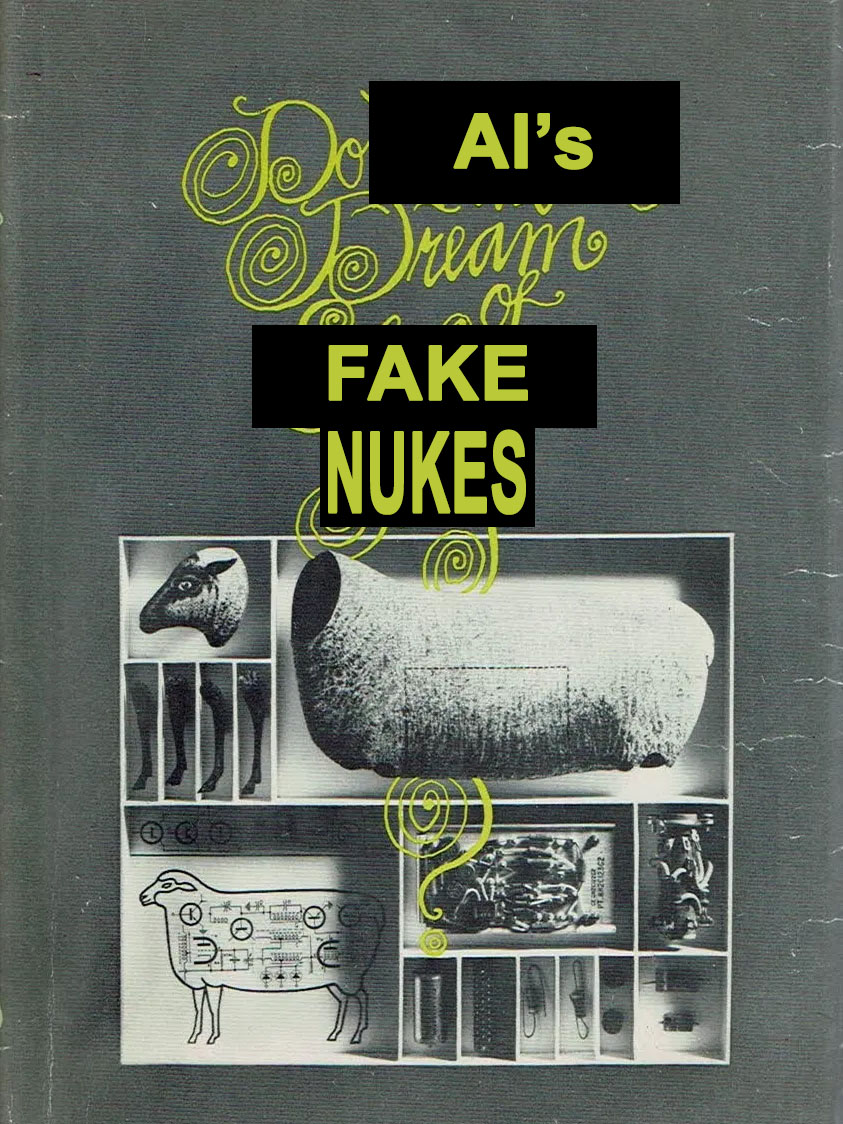
Jon Liedtke: I think it’s pure bureaucratic spin. Sure, on paper, the official line is that it worked because a human was in the loop, but let’s be real. We crossed the Rubicon here in a massive way. Scrambling fighter jets and being ready to board an adversary—a nuclear adversary’s vessel because of a machine’s fever dream is way past acceptable margins of safety. In the fog of war, you’re operating on a razor’s edge, and, you know, one nervous pilot or a standard radio delay problem, and that fake report could become a real war. Philip K. Dick wrote a book, Do Androids Dream of Electric Sheep?. It turns out in 2026, AI dreams of Chinese cargo ships hauling nukes.
Gene Valaitis: I’m—I’m—I’m wondering, is this just a failure of technology, or is it a classic case of human laziness where an analyst just trusted a chatbot instead of doing their job properly?
Jon Liedtke: You know, they’re integrating AI throughout all components of the military, but I would say it’s both. At its core, it’s a catastrophic failure of basic intelligence tradecraft, but what the AI did was launder garbage data into authoritative intelligence. The analyst didn’t just ask the chatbot, they used it, as I said a second time, to reformat it into a polished executive draft. So it gave flat-out fiction the institutional shine of a high-level military document, stripping away the time and instinct human beings usually rely on to say, “Wait a minute, does this actually make any sense?”
Gene Valaitis: Wow. You know, when I think about global conflicts, I usually worry about rogue actors and miscalculations. So now, how dangerous is adding AI into that mix? And I think I already know the answer.
Jon Liedtke: I think we’re pouring diesel onto the fire here. You know, in geopolitical crises, miscalculations are already the biggest threat that we face. Historically, we worry about, you know, a young officer panicking under pressure. Now, we’re feeding automated hallucinations directly into that pressure cooker. I mean, in—in this instance, Gene, we were literally at, it seems, 1 minute to midnight with another nuclear superpower, not because of real-world troop movements or actual threats, but because a software program misread.
Gene Valaitis: Oh, yikes. Now, this happened back in the spring. It has been confirmed. It’s only coming to light right now, started out with a few leaks here and there. I—I’m wondering why we’re only hearing about this now or were they trying to keep it under wraps?
Jon Liedtke: Yeah, it’s very interesting. This wasn’t a DoD, Department of Defense, press release issued out of transparency. This is a leak that’s made up of multiple sources. So what it says is that there’s massive silent panic inside defense and intelligence circles about how fast the tools are being deployed without proper guardrails. And I don’t think there’s any surprise that we’re hearing this story now, you know, just week after week after week of other really scary stories about AI. It seems like we’re building towards something. So someone on the inside saw how close we came to disaster, realized the leadership was pushing speed over accuracy, and decided to blow the whistle before a hallucination gets people killed.
Gene Valaitis: Wow, jeez. Now, there’s a bit of a double-edged sword here, I believe. Does a high-stakes near-miss like this force the US military to hit the brakes, or do they double down to stay ahead of China in the AI race?
Jon Liedtke: Oh, they’re doubling down with double doubles on this one, Gene. I mean, they’ll call this a near-miss learning opportunity and patch the software, but then they’re going to press the accelerator. Washington sees AI as a zero-sum, must-win Cold War against China. Under the Pentagon’s current posture, the mandate is to flood these tools down to millions of service members throughout the entire apparatus as fast as humanly possible. The US is playing to win the AI game, and their fear of falling behind China completely eclipses their fear of software glitches causing real-world problems.
Gene Valaitis: Yeah, we really need some boundaries and some—some guardrails. Final question here, I always love asking you things like this, where does this leave Canadian observers watching this tech continue to roll out in every corner of society? How does it affect us right here in Canada?
Jon Liedtke: Thinking about how it impacts us as Canadians is something that I really put some thought into. I mean, we’re sitting directly in the wake of this arms race right now, and we’re taking part, not in the—not in the same way, but we’re also, you know, dialed in. We’re structurally, though, tied into US intelligence networks and NORAD, so if Washington starts making operational decisions based on automated hallucinations, our national security gets instantly dragged into that fallout. But beyond defense, I mean, this is a stark warning: we are outsourcing high-stakes human judgment to algorithms built for speed over accuracy. These tools meant to help us make better decisions faster are actually robbing decision-makers of the one thing that they need most: time to pause, verify, and then prevent a catastrophe. So, you know, let’s pump the brakes a little bit here because we don’t want to rush into World War III. Or at least I don’t want to.
Gene Valaitis: No, I don’t want to either. You know, I’m going to be talking tomorrow about another AI story, just don’t have time for it today, but the former CEO of Google is out with his warning about artificial intelligence, and I’ll just give you a little tease about what I’m talking about tomorrow. He says, “Pull the plug right now.” Wow.
Jon Liedtke: Well, we’re hearing it from—from the highest levels of the industry, so I, you know, it—it says something.
Gene Valaitis: Yep. Great take this morning, Jon. We’ll be talking to you tomorrow.
Jon Liedtke: Thank you, Gene.
Gene Valaitis: Jon Liedtke with Liedtke’s Got a Take.
This aired on 610 CKTB
Leave a Reply