
Jon Liedtke joins 610 CKTB’s Gene Valaitis for his regular weekly segment, Liedtke’s Got a Take!
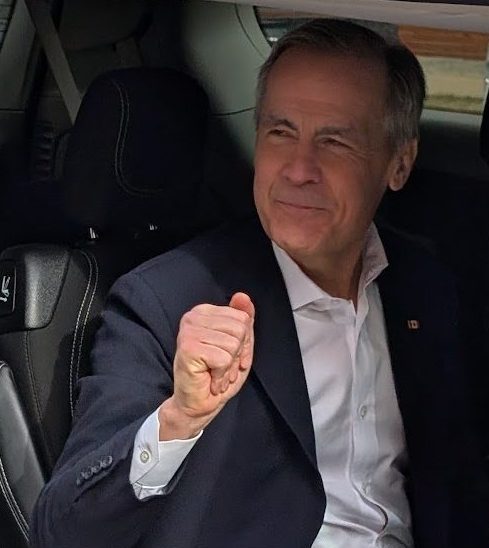
Jon Liedtke discusses Prime Minister Mark Carney’s CEO-style governance, marked by strict and no-nonsense corporate rigor. Highlighting his approval of the $40 billion Pacific Link pipeline and global trade moves, he explores whether this macro focus aligns with or alienates voters facing domestic affordability issues.
Transcript (Gemini Generated):
Gene Valaitis: It is time for Liedtke’s Got a Take. Good morning, Jon.
Jon Liedtke: Good morning, Gene.
Gene Valaitis: Hey, you know, Jon, there’s a clear pattern emerging that Mark Carney isn’t governing like a traditional Prime Minister. He’s more like a corporate CEO. So, I was reading Justin Ling’s article in the Star describing Carney running a tight shop where he acts like an old-school executive, expecting corporate rigor, setting strict deadlines, cutting off unprepared people. So who actually holds sway in the inner circle? And could this corporate style alienate his caucus or supporters?
Jon Liedtke: You know, Gene, I think that this is just his central banker muscle memory kicking in. He knows how he likes to run his shop. He’s done it for quite a number of years across multiple continents. And what we’ve seen is Ottawa power has shrunk to a tiny C-suite. His chief of staff runs the staff. He has a newly created COO position that manages his schedule and public appearances and his tone. He’s got an economic advisor and then a couple key ministers to deploy. But he has cut political staff positions compared to the Trudeau era. And we’ve heard from backbench MPs that they feel disaffected, receiving directives from HQ. Reports are staffers are actually blown away by the sharp tone that the Prime Minister takes with senior advisors and certain cabinet ministers. Ex-Trudeau cabinet ministers feel, you know, maligned and pushed out. And there’s countless Liberal MPs who have complained that they are unaware of his announcements, his agreements, his travel, reducing their work as MPs to photo ops and constituent work and voting. Now, that can be argued as good or bad, but, you know, if they’re voicing concerns, they’re upset about it. And there’s reports that he does get upset at caucus when they miss deadlines, and progressive Liberals are lamenting a heavy pivot to industry. But his calculation is pretty clear, and it’s just return on investment. With Trump threatening trade, he understands that voters care more about economic stability than caucus feelings.
Gene Valaitis: [Laughter] Caucus feelings, I like that. Yesterday’s news out of Alberta was the Prime Minister alongside Premier Danielle Smith designating the $40 billion Pacific Link pipeline from Alberta to BC Canada’s first project of national interest under the Building Canada Act. Now, Albertan Jason Kenney, haven’t heard from him in a while, but he’s calling this a total repudiation of Trudeau-era policies. I have to agree with that. So how is this all going to play out politically?
Jon Liedtke: You know, that Fort McMurray presser was a masterclass. He stood alongside Premier Smith, and he showed that Carney’s Canada Corp is about getting things actually done. Now, we can have disagreements about whether this will actually happen, but this is a different process. And when he was asked about federal taxpayer billions going into this, Carney snapped back like the central banker he was and still is, quite frankly, saying Canadian taxpayers are going to make a lot of money off of this pipeline. But he’s reading the room. Abacus Data polling just came out showing 41% of Canadians are putting oil and gas pipelines as the project they want built first and fastest—that’s well above housing at 30%—and public money is the only way to get that shortcut to having these mega-projects actually built. So, a traditional politician would get defensive about subsidies or talk about environmental tradeoffs, but Carney’s treating the federal balance sheet like a corporate portfolio looking for a yield. And by using the Major Projects Office to fast-track approvals, if it actually does happen, and actively embracing the resource sector, it’s not a surprise to see former Premier Kenney calling this a total repudiation of the Trudeau era. Carney is executing Alberta’s dream project, quite frankly, under a C-suite Liberal banner. He’s almost out-Poilievreing the Conservatives.
Gene Valaitis: Yeah. You know, a couple of weeks ago, Carney dropped immigration hints to, of all people, the New York Times, gave a landmark trade speech to the EU and their parliament before Canadians—Canadians even knew about it—or the Canadian parliament. The guy uses YouTube videos; he rarely does one-on-one domestic interviews. So is this strategic statesmanship, or is he just treating our domestic media and parliament sort of as an afterthought?
Jon Liedtke: Yeah, this is treating domestic accountability as an afterthought. Dropping major policy shifts in the New York Times puts Canadian news behind American paywalls. Addressing EU Parliament demonstrates a contempt for the domestic audience over a foreign audience, even if the viewership is bigger, and I get that. But rarely appearing for question period, utilizing these YouTube videos is just further evidence of what Justin Ling noted in his column, that Carney disdains what he considers an inane process—inane process questions from the Ottawa press gallery. So, he uses corporate PR to speak over Canadian journalists, to speak directly to markets, and he wants global executive statesmanship without facing the tough cross-examination back home.
Gene Valaitis: Yeah. Now, Pierre Poilievre responded on social media saying he supports the pipeline and credited Danielle Smith. But he also said—and it’s accurate—it took Carney 18 months just to put one project on the list while the others gather dust. I think Poilievre has a point here.
Jon Liedtke: Yeah, he’s tapping—Poilievre is tapping into a massive vulnerability that Abacus actually highlighted in their polling, and that specifically is that permission is not patience. The same poll showed, I think, 60% of Canadians expect construction to be underway within a year. So when Poilievre hits back hard, arguing that it took Carney nearly a year and a half to get a single proposal onto a national interest list, that resonates with people. But the Carney model is state-directed corporate capitalism using major agencies like Build Canada Homes or the Major Projects Office to do end-run arounds the broken 350,000-person public service. Poilievre’s model is deregulation with the state getting out of the way so private investors can invest. Carney wants the state acting as the lead managing partner while also soliciting investment on these multi-partner projects.
Gene Valaitis: Yeah. Now, when and if this pipeline is completed and it starts flowing, it could be like a million barrels of oil a day; that’s a lot. I’m just wondering, is Carney using energy exports as a real economic leverage against Washington?
Jon Liedtke: Yeah, this is macroeconomic hardball, Gene. Carney stood at that podium and explicitly declared that oil demand will continue to be significant for decades to come and that Canada must be the world’s trusted supplier. I mean, that’s a total break from the Trudeau era. But look at the response to Washington threats. I mean, a reporter asked Carney about Trump demanding an apology within three to four weeks and dropping all tariffs on our side, and his advisor Peter Navarro told Canadian lobbyists to get the hell out of the country. I mean, a normal prime minister would take this bait. Carney, though, just laughed, smiled, and delivered a cold corporate brush-off. He said, “I take note of both comments. No response to either,” dismissing them both, but reiterating that we stand ready to negotiate in good faith. But he thinks that he can afford to be this icy because he’s building up structural leverage. According to Bloomberg, this new Canada-EU love affair, the Alliance for the Future, announced intentions—if it gets approved—to build new undersea cables and increase fuel shipments to counterbalance the US and China. So when you combine EU trade alliances with redirecting a million barrels of crude a day away from the US to Asia, Gas Buddy actually was right yesterday with one of their commentators: the US Interior should be alarmed because this is pushing Canadian oil away from American refineries that rely on it. So Carney is using energy infrastructure to break the captive relationship so he doesn’t have to apologize or capitulate to Washington. I mean, it’s a bold strategy, and we’re going to see how it plays out for him, Gene.
Gene Valaitis: Yeah. You know, I saw the convicted felon, that Trump flunky Peter Navarro one, saying that, and it reminded me of a Chihuahua in the middle of a thunderstorm. But hey, listen, final point here on Liedtke’s Got a Take. This is a lot of global focus we’re talking about. Is it going to distract from some of our other domestic problems like housing, the cost of living, the cost of groceries? The list goes on and on.
Jon Liedtke: Yeah, I think this is actually the single biggest political vulnerability. Employing these C-suite strategies, EU trade deals, massive pipeline—the timelines look—it all looks great on the front page. But this doesn’t necessarily lower grocery bills in Windsor or Niagara, address healthcare backlogs, or lower rent in Southwestern Ontario today or tomorrow or, you know, anytime in the near future. Carney implemented 22,000 public service cuts without fixing the core bureaucracy. So if he spends all of his executive energy playing 4D chess while Canadians still feel their daily cost of living doesn’t improve, the shareholders in this scenario—the voters—may decide to fire the CEO, the Prime Minister, at the next AGM, which is the next election, whenever that happens. So I would say for Carney, do an election sooner than later if you want to, you know, not take that risk and secure this majority in cement, because you don’t want to take a risk of it going down when you’re riding high in the polls today.
Gene Valaitis: All right. Excellent take this morning. We’ll talk to you on Monday.
Jon Liedtke: Thank you, Gene.
Gene Valaitis: Jon Liedtke and Liedtke’s Got a Take.
This aired on 610 CKTB
Leave a Reply