
Jon Liedtke joins 610 CKTB’s Gene Valaitis for his regular weekly segment, Liedtke’s Got a Take!
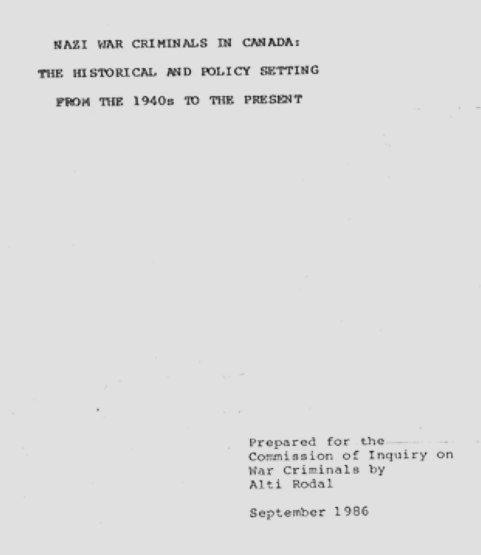
Jon Liedtke discusses a federal court ordering Ottawa to unseal secret files on post-WWII Nazi resettlement in Canada assisted by US intelligence. I critique Canada’s historic rejection of Jewish refugees while admitting war criminals, dismissing Ottawa’s secrecy excuses, and demanding full transparency to combat rising modern antisemitism.
Transcript (Gemini Generated):
Gene Valaitis: It is time for Liedtke’s Got a Take. Good morning, Jon.
Jon Liedtke: Good morning, Gene.
Gene Valaitis: Well Jon, as you know, my dad was a Holocaust survivor. I’m a lucky guy cause, had he gone down, we would not be talking, my sister wouldn’t be here, and I always remember that. And a federal court just ordered Ottawa, finally, to unseal long-hidden files on ex-Nazis that resettled in Canada after the Second World War. Now, what exactly has the federal federal government been doing to keep this thing secret from all of us for so long?
Jon Liedtke: Well yeah, a federal court just ordered Ottawa to unseal these long-hidden files on ex-Nazi and ex-Nazi collaborator and ex-Nazi sympathizer resettlement in Canada post-World War II. We’re talking about a textbook case of historical hypocrisy, administrative cowardice, and the entire fight, the legal fight, centers on something Ottawa’s been trying to bury yeah for seven decades, which is the extent to which US intelligence agencies smuggled and resettled these war criminals, these ex-Nazis, SS members, Nazi collaborators, sympathizers right past our immigration and security screening processes into Canada during the ’50s. Ottawa found out about it, some of them knew about it as well in either wink-wink, nudge-nudge, look the other way, but they realized over the decades just how horrific this looked, so they threw a giant rug over the whole thing. So inadequate security screening led to many of them coming in, we were reluctant as well to prosecute these war criminals for reasons we can talk about in a bit, and, you know, Canada has long been seen though as a haven for Nazis and their collaborators, including large numbers of Waffen-SS soldiers. So B’nai Brith had to take the Feds to court just to drag basic history out into the daylight.
Gene Valaitis: Yeah. Well, you know, I take exception to you saying ex-Nazis. You’re a Nazi, you’re a Nazi, you’re a Nazi. And I don’t care if these guys are 85, 95, 105, they should stand justice in a court, and even if they’re old, they should be tossed in jail. Now, Ottawa’s arguing that the release of these 1950s records would damage modern US-Canadian relations. Now, do you buy that diplomatic karma excuse or is Ottawa bowing to pressure from Washington?
Jon Liedtke: You know, first, I do agree with you, you know, a Nazi is a Nazi is a Nazi. I’m just using the legal distinction that these were Nazis who disavowed and, you know, took off the uniform, if you would, but I agree with you, the uniform never comes off. But Ottawa was arguing that releasing these records showing that the US intelligence bypassed our immigration laws saying that it would damage modern Canada-US relations today. That’s bunk, it’s total nonsense. Federal lawyers actually stood up in court and tried to claim that this would exacerbate ongoing tensions with the US. Nobody believes that unsealing dusty records from the ’50s is going to spark a diplomatic crisis with the White House today, because, and quite frankly, how much worse could it get than a double barrel of a trade war and sovereignty threats, actual invasion? The justice rightfully threw that argument out. But, you know, I do get it from Ottawa’s perspective why they panicked. Admitting that we’ve been hiding from our own citizens that US intelligence officials bypassed our immigration laws to help resettle Nazis and sympathizers and collaborators makes both of our governments look bad. It’s not about current national security, it’s about protecting state institutions from historic embarrassment. I get that, I just disagree.
Gene Valaitis: Yeah. Well, the government has 30 days to appeal this order, they appeal everything. But given the trade negotiations with the US, what do you expect the government to do?
Jon Liedtke: I think that the government will appeal the release of this Nazi resettlement files in Canada just to buy time. Yeah, this is where my cynicism really kicks into high gear. You know, the federal government could do the right thing, rip off the Band-Aid, accept the court ruling, and finally release the docs. But given the ongoing trade friction with the US and the government’s pathologically defensive posture, I do expect Ottawa to maintain this and push it as high as they can for as long as they can, not because they believe they’ve got a shred of legal merit, but just to buy time, drag it out in courts until a trade deal is done or Trump is gone, and just kick this political headache down the road so they don’t have to drop this mess on Washington’s desk right now.
Gene Valaitis: Yeah. Those of us who know about post-Second World War Canadian history, Canada was actually shutting its doors to a lot of Jewish Holocaust survivors, but they were secretly fast-tracking Nazis into Canada. So by continuing to block these files, is the government effectively really protecting a dark legacy in our very own country?
Jon Liedtke: Yeah, this is this is the bleak irony to it all. In the immediate post-war years, our government here in Ottawa maintained deep-seated institutional antisemitism and restrictive immigration barriers. I mean, one senior official remarking, you know, “None is too many.” This resulted in Jewish Holocaust survivors actually making up about only 13% of the displaced persons admitted to Canada in the late ’40s after the war. But then again, we know after the war now, our government was busy relaxing security guidelines and some of them potentially working with US intelligence to resettle these Nazis in Canada. So by continuing to block these files today, Ottawa isn’t protecting national security, they’re running institutional witness protection for Nazi ties and protecting the legacy of the officials who enabled it. I don’t believe in sins of the father, descendants shouldn’t be blamed for what their ancestors did, but our federal government shouldn’t be hiding the truth from us either.
Gene Valaitis: Yeah. Now defenders often claim, again, more history, bringing in these Nazis was a dirty, necessary move to gain an edge during the Cold War. Now is that a legitimate defense? I mean, this really sounds like an illegal invasion of Canadian and moral law.
Jon Liedtke: You know, so post-World War II, the concern immediately was not the Nazis, who were seen as gone, even though they were being resettled at the same time, it was the Soviet Union. So we know that through Operation Paperclip in the United States, they were resettling Nazi rocket scientists, Wernher von Braun being one of the top ones, of course. And so, listen, I don’t agree with it now, but, you know, hindsight is 20/20. I’m pragmatic, which is precisely why I’m so cynical about government power. But I get that the Cold War was a messy time, and they thought that, hey, if we bring in a bunch of fascists, they’ll help take care of the communist problem that we have growing up here in our own country, and maybe we can use them to go abroad as well. But yeah, no, we don’t get retroactive passes for breaking our own domestic laws, overriding security screenings, and letting war criminals settle just because we were paranoid about the Soviets.
Gene Valaitis: Yeah. Now some argue against releasing these files to protect the privacy and legacies of families living in Canada today. Well, what about the legacy of my dad, the doctor, who was tossed into a concentration camp and just about died while millions did die around him? So why isn’t unsealing everything urgent right now? I believe it is.
Jon Liedtke: It is incredibly urgent to release this all right now. The protecting family legacies line is polite whitewashing. I mean, and quite frankly, right, I agree with you about your father, and there shouldn’t be any whitewashing about what led to the situations that, you know, he was put into, horrific ones. I mean, we are currently living through a period where institutional antisemitism, mainstream Jew hatred, and just hatred is continuing to rise, but, you know, antisemitism at levels that we haven’t seen since the time period that we’re talking about right now, in the ’30s, ’40s, and ’50s. And as we approach the century since World War II, leaving our historical records blacked out or heavily redacted only gives oxygen to Holocaust denial, revisionism, and conspiracy theories. So truth and absolute transparency are the only antidotes to that rot. And so thank you to B’nai Brith, who fought for years to get these records unsealed, because we need to know the raw, unredacted truth.
Gene Valaitis: Yeah. Final observation here, I’ll get your take on this. You know, I just read the late-breaking news in from Ottawa, we lost 42,000 jobs last year, the price of gas and diesel is going crazy, food is so expensive now, it’s ridiculous. So Canadians have a lot to worry about. But why should an everyday Canadian care about a 70-year-old government cover-up? Because I certainly do.
Jon Liedtke: Releasing Canadian records showing secret Nazi resettlement in Canada doesn’t cost taxpayers who are dealing with rising costs a dime. Doesn’t take a dollar away from healthcare, transit, housing construction. It places zero burden on any citizens. It only places a burden on government institutions, to be honest. If we tolerate federal secrecy and administrative cover-ups on decisions made almost a hundred years ago, we’re giving Ottawa a permanent free pass to hide the screw-ups today. And plus, quite frankly, with how messy cross-border politics are right now, I think the last thing that we need is Donald Trump actually finding out that Ottawa has been hiding these secret Nazi records. So it’s probably better to just get it out in the open, because the story is in the open, it’s in the media, and it’s going to continue to be in the media.
Gene Valaitis: Excellent take this morning, my guy.
Jon Liedtke: Hey, thank you, Gene. I’ll talk to you on Tuesday.
Gene Valaitis: You got it. There he goes, Jon Liedtke, with Liedtke’s Got a Take.
This aired on 610 CKTB
Leave a Reply