
Jon Liedtke joins 610 CKTB’s Gene Valaitis for his regular weekly segment, Liedtke’s Got a Take!
Jon Liedtke discusses the Dominion Society of Canada, a far-right White Nationalist group using deceptive tactics to secure event space. He questions whether police warnings to venues constitute improper political policing, concluding that extremism thrives on genuine institutional failures and public anxiety surrounding infrastructure, healthcare, and immigration.
Transcript (Gemini Generated):
Gene Valaitis: Every Tuesday morning, we talk to Jon Liedtke, a feature we like to call “Liedtke’s Got a Take.” Good morning!
Jon Liedtke: Good morning, Gene.
Gene Valaitis: Hey listen, um, there is this organization, they’re called the Dominion Society of Canada. Now, some people suggest that they’re a white supremacist group, others suggest that they’re just a far-right group, others simply say they have a point of view and they need to express it. So, um, we know that their convention ended up in a banquet hall in Burlington after telling the owner that they were renting the space for a photo shoot. Now, it was originally supposed to be in Hamilton, but they got chased out of Hamilton. So, is deceiving local business owners the only way these groups can actually secure a physical space now? And, you know, like it or not, they are allowed freedom of expression, and just because you don’t like it doesn’t make you right.
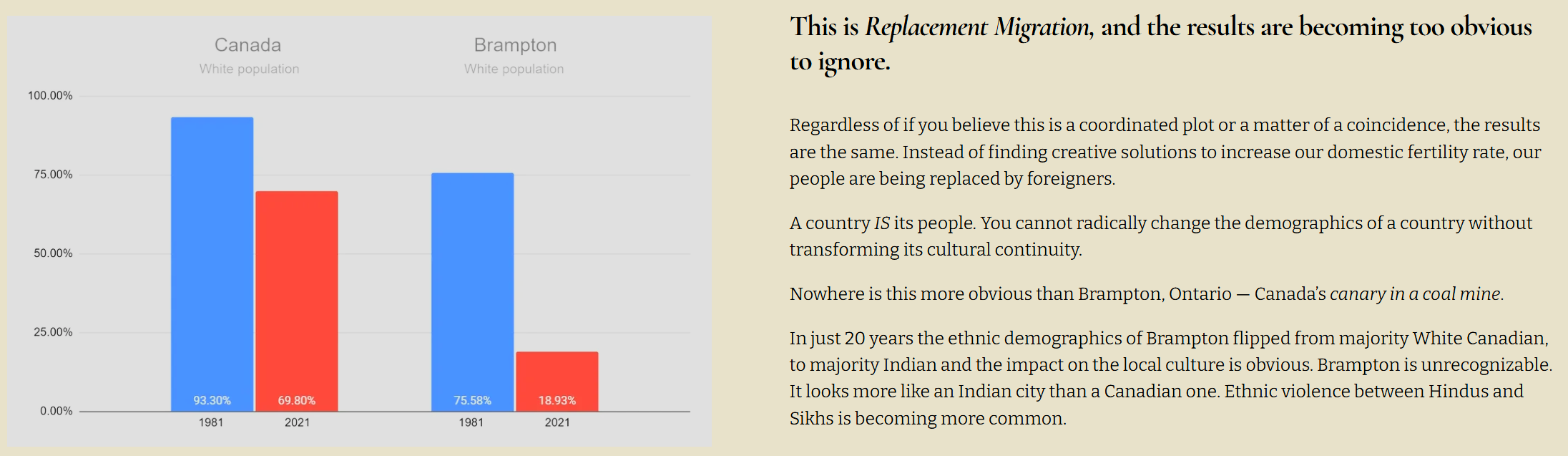
Jon Liedtke: Yeah, you know, it’s—this is a—this is a tough one. I mean, I’m—I’ll just quote right now Blues Brothers: “I hate Illinois Nazis,” and I think that that’s sort of what this is about here. It’s just—it’s this idea that, yes, they have a right to be doing what they’re doing, but what is the response supposed to be from our, you know, society? I think that venues not booking them, not allowing it, makes perfect sense because, you know, when your core policy platform is the forced mass deportation of up to 9–10 million residents, you can’t really just walk up to a venue manager, hand them a business card, and book the space for lunch. Um, they got shut out of Hamilton, barred across West Lincoln and Grimsby, locked out of Niagara Parks, and so they pulled a classic bait-and-switch. But I find it really interesting that they deny that they’re white nationalists—I’ve seen that across multiple media interviews—and I’m on their website right now, Gene, and they’re the ones who put up a bar graph that shows the Canadian white population in 1981 versus 2021, and the white population in Brampton over the same two time periods. And there’s a quote that says, “In just 20 years, the ethnic demographics of Brampton flipped from majority white to majority Indian, and the impact on local culture is obvious. Brampton is unrecognizable. It looks more like an Indian city than a Canadian one.” I mean, if these aren’t white nationalists, what are white nationalists?
Gene Valaitis: Yeah. Well, the Hamilton police got on tape admitting they actively warned venues because of—their quote, not mine—”how people feel” about the group’s platform, which you just articulated. But did law enforcement cross a line into political policing, or were they justified in taking these steps?
Jon Liedtke: Um, yeah. I—I’m very uncomfortable, deeply uncomfortable with hearing the audio and finding out about this, that a Hamilton Police inspector explicitly admitted on tape that they were reaching out to private venue owners to discourage based on, you know, community feelings. I’m not defending this group; I think they’re reprehensible, I think they’re vile, um, but this is inherently a political act, not a law enforcement act, and it makes it tougher for them to be seen as neutral arbiters and enforcers of the law and not as political actors. So, yeah, I think that that was a misstep. You know, if they wanted to put out a statement about it through the media, that’s one thing, um, but to go actively encouraging people from booking their venues, that—that crosses a line.
Gene Valaitis: Yeah. You know, it’s one of those razor’s edge kind of a thing. Um, like I—I find their website abhorrent. However, the Justice Centre for Constitutional Freedoms warned that the police and municipal leaders violated Charter Section 2 by pressuring private businesses to cancel bookings. So, if a registered non-profit hasn’t any criminal record, hasn’t broken any laws, should police have the power to shut down their political assembly?
Jon Liedtke: No, they shouldn’t. The community should make that decision themselves, and as venues, and as people who may have wanted to go to that venue or not. You know, vote with your money. Don’t use the strong arm of law enforcement and, you know, the municipality, if you will, to try to enforce political views. I think that it actually detracts from, you know, a strong argument against having them in your city by, you know, seemingly compelling businesses—whether it’s under threat or just, you know, you get a phone call from the police saying, “We don’t think you should be booking this person or this group,” you’re going to really think twice about it, and I think that that’s the overstep. But this is the trap that the extremists set for democratic institutions, right? Um, and it—it’s a problem, but I think it would have said a lot more if the community willingly decided not to have them there without the—the compellingness of the state.
Gene Valaitis: Yeah. Well, one—one of their keynote speakers was denied entry into the UK, denied entry into Canada. Now, you just articulated what their platform says on their website, and a lot of Canadians find that abhorrent—I would probably say the vast majority. Uh, but John, um, these far-right groups capitalize on real public frustration over housing, public services, that mainstream politicians are failing to fix because they don’t want to lose votes.
Jon Liedtke: No, and that hits the nail right on the head, Gene. Extremism doesn’t grow in a vacuum; it grows in the cracks of institutional failures. People across Southern Ontario are struggling with, you know, housing costs, healthcare wait times, overcrowded classrooms, immigration system that has expanded far faster than local infrastructure can deal with, and groups like this Dominion Society are taking legitimate public anxiety and they are weaponizing it and turning it into radical, you know, some would say racist, scapegoating, offering mass deportations and stripping citizenship as a simplistic fix. It’s not a simplistic fix, and it harkens back to something that, you know, like 1930s, 1940s.
Gene Valaitis: Yeah. Uh, but didn’t Trump win the last election on a platform of mass deportations, too?
Jon Liedtke: Well, thank God we live up here, um, Gene. I mean, yeah, he did, and these concerns are being felt across, you know, the world right now, and there—it’s not to say that these anxieties don’t exist. It’s not to say that our infrastructure is what it should be to, you know, accept the amount of people that we were letting in. Um, but having said that, you don’t need to veer hard right into, you know, racist white nationalist territory to be upset about local infrastructure. What you do in that case is, you know, run for city council.
Gene Valaitis: Yeah. Uh, interesting discussion about this group, and uh, another great take this morning. I appreciate it, thanks.
Jon Liedtke: Thank you, Gene.
Gene Valaitis: There he goes, Jon Liedtke! “Liedtke’s Got a Take.” He’ll be back with us on, uh, when is it, Friday morning at 9:15.
This aired on 610 CKTB
Leave a Reply