
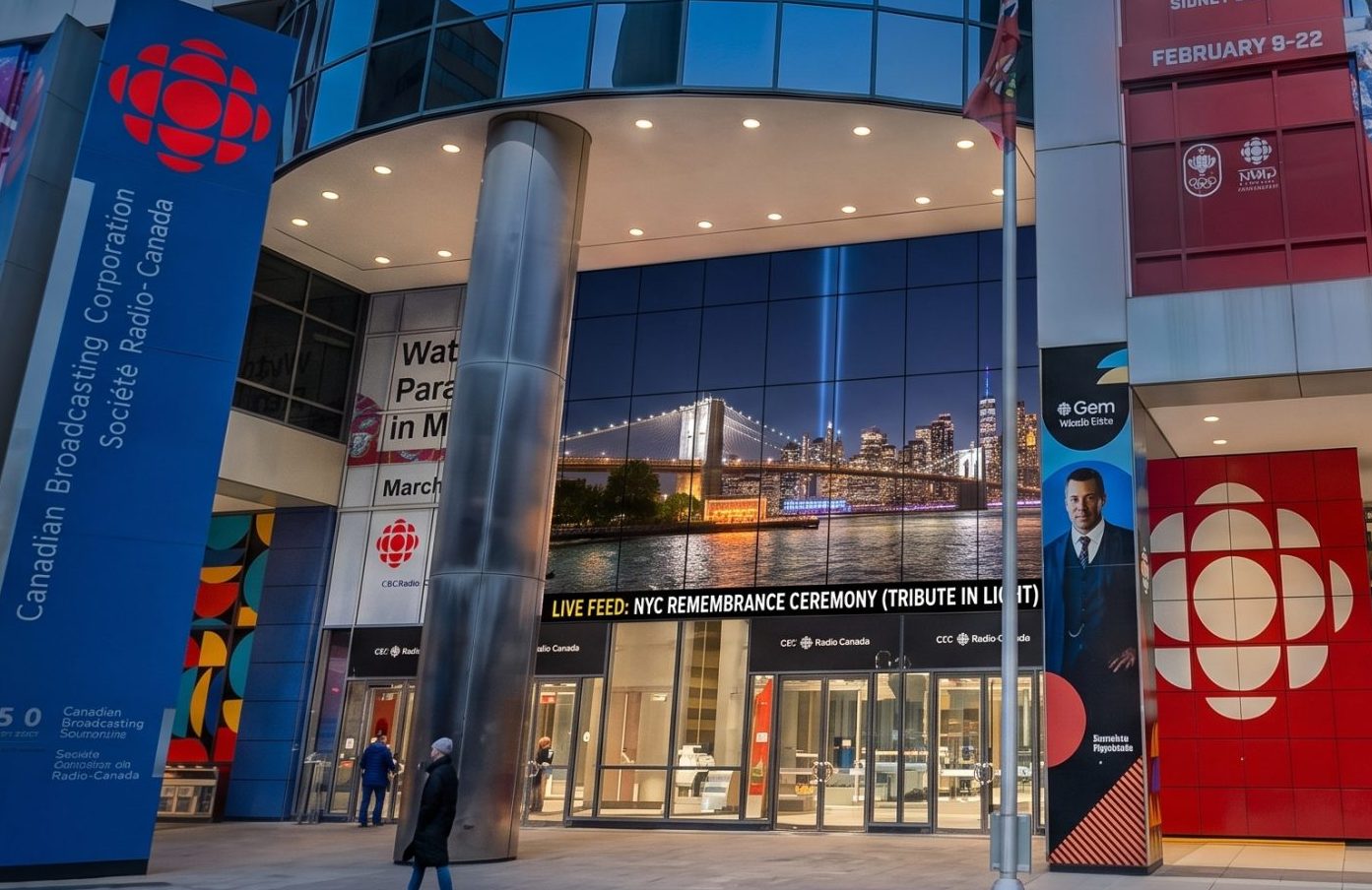
Jon Liedtke joins 610 CKTB’s Gene Valaitis for his regular weekly segment, Liedtke’s Got a Take!
Jon Liedtke criticizes the CBC’s editorial stylebook guidelines that describe 9/11 attacks as “passenger jet crashes” rather than acts of terrorism, arguing this language sanitizes mass murder, ignores Canadian statutory law, demonstrates a virtue-signaling double standard, and disrespects taxpayers.
Transcript (Gemini Generated):
Gene Valaitis: “Liedtke’s Got A Take” with Jon Liedtke. And good morning, Jon.
Jon Liedtke: Good morning, Gene.
Gene Valaitis: What a morning it has been! Oh, so let’s—let’s talk about this Richard Crainium at the CBC. Jon, when you read that CBC—and this one guy told journalistic people, reporters, and writers to call 9/11 passenger jet crashes instead of a terrorist attack, which is exactly what it was, 25th anniversary coming up—what went through your mind?
Jon Liedtke: You know, it’s—on face value, it’s pure offense. I mean, the numbers are right, the legal listing of the terrorist entity is right, the CBC’s defense of attribution, not denial, still, you know, it reads like they’re just describing an accident that occurred. But think about what we’re talking about here: 2,977 humans murdered, 24 Canadians killed, 158 Canadian soldiers who ultimately would die in Afghanistan as a result of it, the incredible people of Gander who opened up their homes to thousands of strangers. And the response from our national public broadcaster is reducing the definition and the defining of mass casualty atrocity of our generation to the linguistic equivalent of a severe air traffic control glitch. These aren’t passenger jet crashes, and that’s not journalistic neutrality. That’s a slap in the face to every victim, every first responder, every Canadian soldier who lost their lives and served, and every Canadian, quite frankly, who lost someone close to them. We don’t need linguistic gymnastics that borders on providing rhetorical cover to actual terrorists, and it’s unacceptable for our taxpayer-funded public broadcaster.
Gene Valaitis: Yeah, no kidding. Kind of like calling World War II “Disagreement Number Two.” In any event, the CBC says they’re just stating the physical facts to remain strictly objective. Now, how the heck does that square with what Canadians actually experienced that day? I was on the air; friends of mine at Cantor Fitzgerald died. How—how do you even square that up?
Jon Liedtke: It—it doesn’t square at all. It completely fractures the reality, the collective reality, the shared reality that we all experienced. I mean, this is, what, the first—this is the first anniversary where a generation of children didn’t experience it, weren’t there for it. So, it’s a really—it’s a really special one in that sense, but it’s also a turning of the page where we have to make sure that we honor the memory of the people. So, this fractures reality. A mechanical failure, a mid-air collision, or an operational error is what causes a passenger jet crash. Flying hijacked aircraft into skyscrapers with deliberate, calculated intent to murder thousands of civilians for ideological purposes, it’s terrorism, period, full stop. The people in Gander didn’t open their doors and their homes and their hearts because of a few accidental plane crashes. Canadians didn’t step up because of some mistakes in the air. And, you know, the average Canadian doesn’t consult internal corporate journalistic stylebooks before tuning into the national news, nor should they have to decode euphemisms. What they expect is common sense, and sanitizing mass murder under the guise of pedantry in a stylebook doesn’t make people look objective; it makes them look detached from basic human reality and morality.
Gene Valaitis: Yeah. Well, CBC defends this by saying they can’t adopt government language without risking becoming the state media. But all you have to do is watch Power & Politics with David Cochrane in the afternoon, or Rosemary Barton—both of them gently caress the Prime Minister’s derrière on a daily basis.
Jon Liedtke: Yeah, putting that aside, and, you know, that’s a fair point. I—I—I say the argument is complete bunk. It’s unadulterated nonsense. If we’re talking about a Third World autocracy where a dictator calls political dissidents terrorists on a whim to throw them in the gulag, fine. I get it. Maintain your editorial distance. But this is Canada, a constitutional democracy governed by the rule of law. And when an organization is listed as a designated terrorist entity under Section 83.05 of the Criminal Code, that isn’t a political opinion, and it’s not regime propaganda. It’s statutory law, vetted by law enforcement, intelligence services, and upheld in our courts. And if our publicly funded broadcaster treats Canadian law and statutory fact as subjective opinion, who are they serving?
Gene Valaitis: Yeah. Well, you’ve pointed out a massive double standard in how the CBC treats different types of language. So, how does their hesitation on legal terror terms compare to their use of modern social terminology?
Jon Liedtke: Yeah, you know, this is a glaring, unmistakable double standard. CBC knows their audience, and they’re making calculated choices here. They have zero hesitation when it comes to integrating modern social terminology, progressive cultural jargon, and trendy identity language directly into their anchor desk voice without demanding third-party attribution or hiding behind quotation marks. And I have no issues with people using preferred pronouns, but, you know, they’re not saying that it needs to be attributed as such, but they do it because it fits their internal newsroom culture, and it signals the right virtues. But when it comes to designating an entity that murdered thousands of people on 9/11 using Canadian statutory law, suddenly they transform their hyper-cautious constitutional lawyers into—excuse me—constitutional lawyers wringing their hands on things. The social jargon is good, but the legal reality is bad, and it’s blatant hypocrisy.
Gene Valaitis: Okay. So, we’re kind of talking shop here, you and me, but for listeners tuning in who think this is just media insiders fighting over grammar, why does this matter to the average taxpayer? We all fund the CBC—last year to the tune of 1.5 [stutters] billion dollars.
Jon Liedtke: Well, I mean, that’s—that’s it right there, full stop. One and a half billion dollars a year to fund this network is a huge amount. Canadians expect when they pay the public broadcaster that it will inform the country with clarity, with spine, and with truth, not run an Orwellian translation service shop during moments of national crisis or commemorations as such. When a network takes public dollars but refuses to call a terrorist attack a terrorist attack, that erodes core trust in our public institutions, and it sends a direct message to the average Canadian taxpayer that the executive suites running CBC hold the public’s intelligence, their values, and our collective memories in complete contempt.
Gene Valaitis: Okay, if you had this CBC guy on—who I have named Richard Crainium—on the line right now, what is the exact change you would demand he and they make to their stylebook immediately?
Jon Liedtke: I would tell them to scrap the, you know, the pedantry and insert a common sense and rule of law clause immediately. If an entity is formally designated a terrorist entity, Gene, under the Criminal Code of Canada, or if an event is universally recognized as a mass casualty act of terrorism like 9/11, reporters should be able to, and quite frankly mandated to, call it what it is in plain, direct English. Stop treating Criminal Code facts like dirty words, stop sanitizing history to appease your newsroom virtues and sensibilities, and start respecting the intelligence and the collective memories of the Canadian public with respect.
Gene Valaitis: It’s a great take, but I just want to add one thing to it, and I don’t know if you have heard this or not this morning. The 25th anniversary of 9/11 is coming up next month, and they no longer give speeches at 9/11. They still name off all the names and ring the bell. Donald Trump wanted to give a speech, and they told him, “Well, we don’t do speeches at 9/11 anymore. We honor the dead.” So, guess who’s not going to show up to 9/11? The President of the United States in New York City. He’s going to go to the Pentagon instead. Why? Because he can give a speech. That’s Donald Trump for you. It’s all—it’s never about all the people who died; it’s only all about him. Indeed.
Jon Liedtke: Well, you know, keep him as far away as possible. And remember what happened, it was just hours after the towers came down, Trump was on New York radio, and he said, “You know, I used to have the tallest building in New York until the towers went up, but I guess now that they’re down, I have the tallest building again.”
Gene Valaitis: A great take! Have a fantastic weekend. We’ll get another take from you and talk on Monday.
Jon Liedtke: Looking forward to it. You have a great one as well.
Gene Valaitis: Jon Liedtke. Liedtke’s Got A Take.
This aired on 610 CKTB
Leave a Reply