
Jon Liedtke joins 610 CKTB’s Gene Valaitis for his weekly segment, Liedtke Has a Take!
Jon Liedtke critiques Ontario’s failing commuter systems. Urban transit promises have dissolved into chaos, marked by stolen e-scooters in Windsor, controversial Toronto bike lane disputes, TTC safety issues, and Ottawa’s broad transit failures. Government mismanagement, poor inter-agency communication, and infrastructure failures leave taxpayers enduring an unsustainable, costly commute plagued by seemingly ongoing delays.
Transcript (Gemini Generated):
Gene Valaitis: All right, every Monday morning at this time, it’s another edition of Liedtke’s Gotta Take. Jon Liedtke joins me this morning. Hey, good morning, buddy.
Jon Liedtke: Good morning.
Gene Valaitis: Well, you know, a lot of folks who are listening to us could be on a bus or could be on a train heading into work. A lot of people have to commute back and forth every single day. And, uh, this is your take today. Now, we were promised some sort of futuristic, green commute. So why does getting from point A to point B seem to be devolving into an absolute circus these days?
Jon Liedtke: Yeah, thanks for that question and for having me on, Gene. You know, there were just a couple new stories this week that all came together and I said, “You know what? We got to talk about this because it seems like our commuting is falling apart.” And I think the reason is, is we were promised this futuristic, green commute, um, you know, but it was a fairy tale. It was sold by politicians and urban planners and tech bros, all who don’t use real roads on a regular basis. The entire promise was this seamless eco-utopia where we’d zip around on glowing e-scooters, hop onto an LRT, and effortlessly cut all of our carbon footprints collectively.
But instead, I mean, here in Ontario, it’s institutional chaos. In Windsor, we have organized crime rings running angle grinder e-scooter chop shops in alleys, according to the corporation that put them on our streets. In Toronto, the province and the city have been in an ongoing battle over road paint and bike lanes. And in Ottawa, the public transit operator is spending $30 million on emergency transit funding because the feds didn’t bother to tell them that they were shifting back to a four-day workweek, and there’s going to be an extra 60,000 commuters. And they said, “Oh my gosh, we don’t have the seats for that, or the routes.” So we didn’t get the future we were promised. We got administrative incompetence with transit cards.
Gene Valaitis: Yeah. Um, I know in your neck of the woods, more than 50 e-scooters have vanished. And like you said, they’re probably in a chop shop. So many young people are getting injured on these scooters, and, uh, you know, parents and doctors are very, very concerned. Uh, you know, when you look at these e-scooters, uh, you know, who’s more to blame here?
Jon Liedtke: You know, I I I think, why do we have to choose who’s more to blame when it comes to it, whether it be the city, the company, the riders, the criminals? There’s more than enough blame to go around. But at the end of the day, it is the city and the company that put these on the streets. There’s a total lack of real-world awareness being demonstrated.
Our core here in Windsor, much like many cities across the province and across the country, face real challenges: property crime, open drug use, and a glaring lack of mental health addiction supports. That’s the reality on the ground. Then the city allowed this scooter and e-bike operator to drop hundreds of multiple-hundred-dollar high-tech, uh, you know, vehicles onto public property, unlocked, untethered, and both act shocked when criminals do crime. Newsflash: that happens. In this case, they’re harvesting the batteries out of them.
Now, I used to have a business in our downtown here in Windsor. If I left thousands of dollars in inventory in my business with the door unlocked, or on the sidewalk overnight, I wouldn’t call the police when it vanished. I would question my own business acumen and judgment. I mean, this is not a sustainable transit model, it appears to be. This is an unmonitored hardware buffet for the black market.
Gene Valaitis: Yeah. Now, in Toronto, people who ride bikes uh try to litigate a Charter of Rights to bike lane to these bike lanes, mainly on Bloor Street in Toronto. Now, are they out of their minds, or are they onto something?
Jon Liedtke: They’re completely detached from objective and constitutional reality, Gene. Look, I get it. Road safety matters, of course. But arguing the Charter’s right to life, liberty, and security of the person means a fundamental right to dedicated municipal bike lanes, that’s an insult to first-year law students who know better. What’s next, a Charter right to a functional cup holder in the car?
I mean, look, the Court of Appeal had to step in as the adult in the room and remind everyone the Constitution exists to protect foundational and critical human rights, not to manage city traffic flows. And if a province can create bike lanes, they too can remove them, because, of course, we know municipalities are creatures of the province here in our country. So if you’re suing the government because you don’t like cars or you want a bike lane, that’s not a constitutional crisis. That’s performative policy activism being played out in the courts.
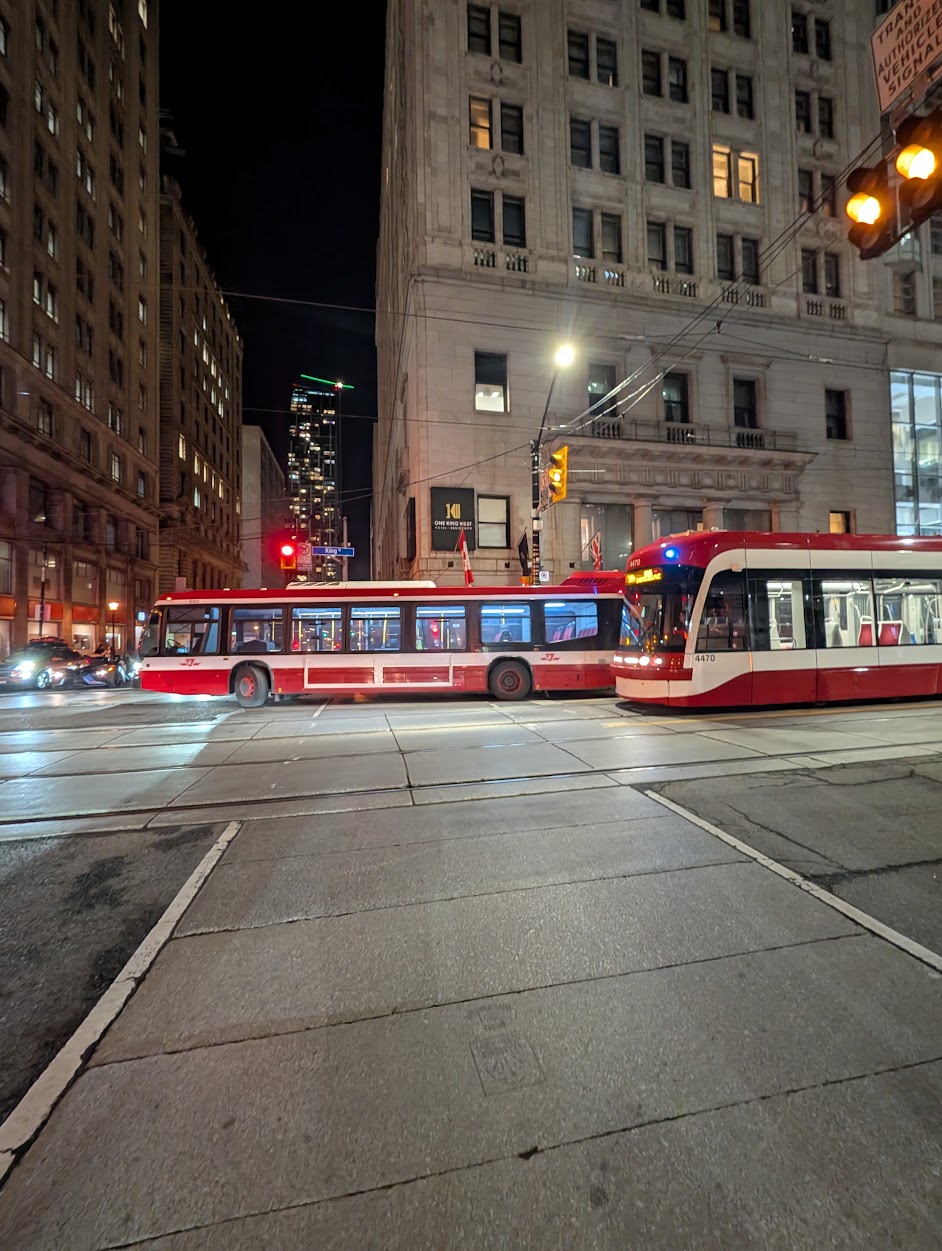
Gene Valaitis: Yeah. Uh, many commuters today in my former hometown of Toronto are calling the TTC subways rolling homeless shelters, rolling washrooms, and rolling drug injection sites. And I know talking to my friends, it’s uh it’s really, really becoming bad. But how did getting to and from work become, I don’t know, an endurance test?
Jon Liedtke: It seems like it, Gene. And, you know, for many people, it truly is. And I won’t I won’t try to suggest that Windsor’s public transit woes, when it comes to this, are the same as, you know, Toronto, for example, um, my hometown where I was born. But every level of government, whether it be cities, the provinces, or the country, quite frankly, have passed the buck along the way until the transit car became the default social safety net when it comes to the unhoused and those in need of those mental health and addiction supports.
Federal and provincial failures on housing, severe mental health, and addiction infrastructure forced vulnerable people to seek shelter wherever, whenever and wherever it’s warm and dry. Meanwhile, transit authorities act as if basic order and passenger safety are outside their purview, due to a lack of meaningful funding from the cities and the provinces. This is public transit hot potato, and we’re all left as the riders or the commuters with burnt hands trying to get from A to B, while provincial and federal ministers are chauffeured from home to work to the airport to, I don’t know, the United Kingdom to pick up a sword.
Gene Valaitis: Finally, up in Ottawa, the nation’s capital, the federal government said, “You got to go back to the office four days a week.” Uh-oh, they didn’t tell the city. Um, their transit uh just can’t keep up with uh the new demand, and in winter, their LRT line routinely freezes up. I mean, it’s it’s uh local transit in Ottawa is just an exercise in complete incompetence.
Jon Liedtke: It it is unbelievable. Seeing those news stories come out of there, I I have to read the stories two to three times just to understand, like, no, it can’t be that bad. They can’t have actually made an LRT that doesn’t run in the winter in Ottawa.
But I mean, look, this is a masterclass in joint administrative failure. We have classic federal bureaucratic arrogance. They’re issuing a top-down return-to-office directive that forced tens of thousands of workers back to four days a week workweek without coordinating with the city transit provider, probably out of a fear of leaks and then organized labor opposition. On the other side, the local transit system itself is so fragile that they can’t add former regular daily commuters, and it triggers a systemic crisis, forcing 30 million in emergency funding to patch just to prevent total gridlock. I mean, this is two giant bureaucracies who refuse to communicate, and everyday taxpayers are left absorbing the cost and the delays to get to work and home.
Gene Valaitis: Yeah. Uh, final question here. I’m out of time. It’s going to have to be a yes or no. Is the modern commuter dream dead in Ontario?
Jon Liedtke: Dead, buried, and the battery was harvested in an alley in Windsor.
Gene Valaitis: Another great take. Thanks, Jon.
Jon Liedtke: Thank you, Gene.
Gene Valaitis: Liedtke’s Got A Take! He’s back tomorrow morning here.
This aired on 610 CKTB
Follow Gene on Twitter or LinkedIn
Leave a Reply