
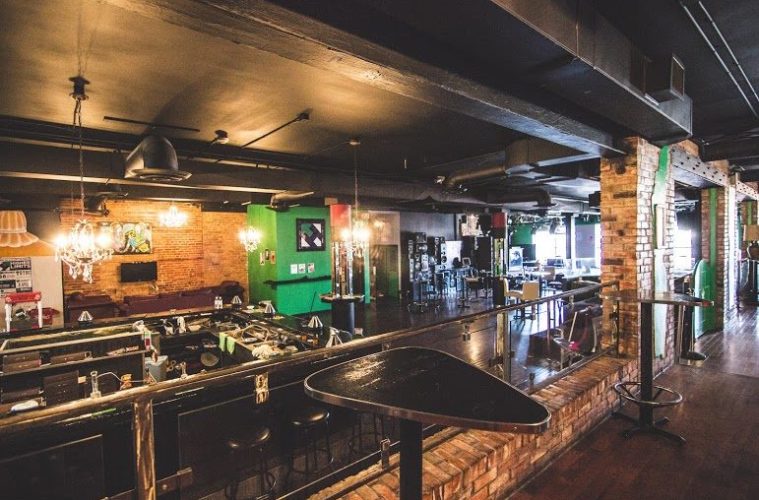
Host Gene Valaitis and guest cannabis industry reporter Jon Liedtke discuss his latest article for StratCann about the systemic failures of Canada’s cannabis tourism sector, The decline of Canada’s Cannatourism Dream. Despite being the first G7 nation to legalize, Liedtke argues that Canada has dismantled its global lead through hyper-regulation and “security theater.” He highlights the stark lack of legal public consumption spaces and the restrictive provincial laws, such as the Smoke-Free Ontario Act, which have effectively stifled the hospitality side of the industry, leaving businesses in a “retail bloodbath” of constant openings and closings.
The conversation also explores the massive shift in consumer behavior, noting a multi-billion-dollar substitution effect where cannabis use is surging as alcohol consumption plummets. Liedtke advocates for “logistical dignity” for the sector, suggesting that cannabis should be treated similarly to wineries or craft breweries with designated consumption lounges and infused dining experiences. By moving away from sterile, pharmacy-like retail environments and embracing social “third spaces,” Canada could finally tap into the lucrative tourism potential it has so far left on the table.
Transcript (Gemini Generated):
Gene Valaitis: Our good friend Jon Liedtke, who’s with us on the line. Good morning, Jon.
Jon Liedtke: Good morning, Gene.
Gene Valaitis: Now, among the many hats you wear is you are a reporter for the cannabis industry in Toronto. And what we’re going to talk about today is Canada’s cannabis tourism industry and why it’s not working. So, you recently wrote for the newsletter StratCann about the decline of the Canadian, as you call it, canna-tourism dream. Now, we were the first major G7 nation to legalize, but you say we’re stuck in what you call “retail purgatory.” So, what happened to that big global lead we were supposed to have?
Jon Liedtke: Well, it didn’t just stall, Gene. We systemically dismantled our lead by design. We had a chance to be the global Amsterdam, a mecca for tourism, but instead we engineered the hyper-regulated landscape of sterile, high-security iPhone-store pharmacies that you’ve seen, I’m sure. Right now, we’ve got over 5,000 products on the market, but nowhere to legally consume them indoors in public. We’ve managed to make cannabis as boring and friction-filled as possible. It’s a profound market failure where customers are legally allowed to buy a product but barred from even viewing it before the transaction is finalized. We’ve traded hospitality for compliance. The result is a retail bloodbath that I’m sure you’ve been seeing on your streets of stores opening and then closing. When I operated Higher Limits Cannabis Lounge in Windsor, we had 30,000 patrons a year. We brought in the likes of Kenny and Spenny, Trailer Park Boys, musical acts, Juno Award winners The Sadies. We had capacity of 500 people. It was a live entertainment venue. And then what happened? Cannabis was legalized and Doug Ford made our business illegal. So from the federal government making it almost impossible to buy and sell it in ways that are frictionless to how the provinces dealt with it, to even municipalities, we have taken an opportunity, a golden goose, and decided to stomp on its eggs.
Gene Valaitis: You know, it’s fascinating. As you’re describing this, I was thinking, you know, comedian Carla Collins, who I have on every Wednesday, when she was through the Niagara region, you know, I went to Yuk Yuk’s and I checked out her act and other comedians, and it was great, and everybody was having cocktails. But you’re right, nobody was smoking pot.
Jon Liedtke: Yeah, and you know what’s the most interesting thing as well that we found at Higher Limits is we would have these big shows and only 30% of the audience would actually be consuming cannabis on site, which showed that people were not offended by the product. They weren’t concerned about being in an enclosed space with it. These were adults. We didn’t allow anyone under the age of 19 to come in. So people were taking that, you know, risk, if you will, of their own accord. They said that they were willing to do so. So I don’t think the government needs to step in between them. The same goes for employees who were willing to take that on. But there’s still obviously hurdles to overcome right now to get to that point.
Gene Valaitis: Yeah. Oh, you’ve identified as in your article as a “final boss” in this regulatory game—it’s not actually the Cannabis Act, it’s the provincial laws like the Smoke-Free Ontario Act. And you say these so-called health laws are killing the industry.
Jon Liedtke: Yeah, they absolutely are. When the Smoke-Free Ontario Act was updated when we were open at Higher Limits to include cannabis and not just tobacco, that was the final nail in the coffin for us. What it did was allowed for the tobacco enforcement officers at our local health unit to not only ticket us as owners, operators—which we were willing to take on to fight this fight—but they were threatening tickets to our employees and our customers of up to $100,000 individually without a limit on the number of tickets that they would issue. At that point, we realized that this was not an endeavor that anyone would take the risk of having to spend $100,000 to walk into the business to pay that ticket, so we ended up shutting down. But meanwhile, you know, just down the street from where we operated in Windsor, Caesars Windsor has a designated smoking area for tobacco that’s just off-site of their main drinking area and their gaming floor. It’s an enclosed space with a covered area that’s just off of a bar. This is a double standard, quite frankly, that exists, and we know it exists. We need to overcome it, but even for people like me who were in this sphere, we didn’t expect that it would all happen overnight, but I didn’t think that we would regress as quickly as we did.
Gene Valaitis: Yeah. You know, cannabis is surging. You know, the numbers you cite in the article are staggering. And you talk about the $11.5 billion substitution. So, if the demand is there, why is the government still standing in the way of consumption spaces? Or are people just turning to things like gummies where there is no smell?
Jon Liedtke: Well, this is the interesting thing. I mean, it’s a multi-billion dollar question. We’re seeing a massive substitution effect. Per capita alcohol consumption is plummeting, cannabis retail is surging. The government is already capturing 50 cents of every dollar spent on cannabis at one level or another, pulling in multibillions, but they’re leaving billions more on the table by refusing to allow cannabis-adjacent experiences like infused dining, broader farm tours, tasting rooms, experiential sharing. We’re trying to fill an alcohol hole that is popping up in our provincial budgets, yet we refuse to give cannabis the same logistical dignity as a winery or a craft brewery. The math is not mathing here, Gene, as the kids say.
Gene Valaitis: You know, some critics might argue that people really don’t want lounges, they’d rather, you know, consume their marijuana—whether they’re smoking it or whether they’re ingesting it or drinking it—you know, at home watching TV. So are we trying to build a “third space” that maybe nobody even wants?
Jon Liedtke: I think that there is a want for it. Listen, if you are someone who has a nice-sized house, a backyard—we saw this during COVID—some people were comfortable with lockdowns whereas other people weren’t comfortable with it, and it was because they had added amenities. And I think that’s what this comes down to. If you live in a retirement home, an apartment building, or a condominium, for example, that has regulations or restrictions on where you can consume your cannabis, or even your medical cannabis, these spaces are increasingly necessary. For those who just want to have social experiences, it’s there as well. And then, of course, it’s that last mile for the tourism sector where you have people who are coming into a city and they can’t consume in their hotels; maybe they can consume on the sidewalk, but they might not feel comfortable to do so. This is just asking consumers to play regulatory roulette right now with their driver’s licenses. And that’s why we should have these third spaces where people can go to, spend the allocated amount of time that they feel necessary to be able to then move on to the next thing that they want to do during the day.
Gene Valaitis: Yeah. Now, I’m old enough to remember going out for dinner in the ’70s and ’80s and, you know, you could smoke in restaurants. And the thing that would drive me crazy is, you know, the waiter would come over and put our dinners down and then somebody a table away or two tables away would light up a Player’s Light or an Export A and the smoke would drift towards me while I’m eating. You know, I don’t know if I want to go back to smoky bars like that, but—so how do you address that problem if you want lounges?
Jon Liedtke: Well, I would say first right off the bat is that it should not be allowed for every restaurant. This should be an opt-in, apply for a license. So if you’re looking to go to this specific restaurant, Gene, you would know that this restaurant allows that to be happening within its premises. So just as, you know, as I’m getting older I don’t like going to loud bars, clubs, music and stuff, I avoid those. I would imagine that patrons would do the same thing, just as those who would want to seek these spaces out would be able to. But let’s just assume that nobody wants to have that smoky experience like that that you’re saying. We can use medically validated vaporization technology available today and pioneered in Canada where we can stop the “research lounge theater” that exists where people have to pretend they’re actually medical scientific subjects to be able to operate medical devices for research purposes—for example, Club Lit in Toronto allowed for that. So we could have vaporizers where it didn’t have that smoke, where everyone could have an enjoyable experience within an enclosed space. The technology exists, we just have to have the political will and understand the economic reality.
Gene Valaitis: Yeah. I don’t have much time, but I do want to get this one question in very quickly. I remember as a little kid going to the LCBO with my dad, you know, he was getting a bottle of wine for dinner for his wife. And he had to fill out this little form and then take it to the cash register and pay, and then take the form to a guy at a counter, and then they would go into this mysterious dark back room and then they would come out with the bag all wrapped up. And it was wrapped in paper and then they would put it in a brown plain bag. Well, of course, we have self-serve now. I was in an Esso gas station this morning and they had beer and wine. But they don’t sell marijuana at gas stores or corner stores. It’s as if they’re, you know, trying to recreate that hidden, mysterious LCBO of the ’60s and ’70s.
Jon Liedtke: We took all the institutional knowledge that we knew from ending prohibition and getting to where we’re at today and threw it all in the trash can. It’s obscene, Gene, I agree with you. Um, from having to hide the product until the purchase is finalized to just making it an onerous experience. I think that we could get to a point where adults are treated like adults. Let them walk into a store, make a purchase, and then leave. We don’t need to have this “security theater” that the government continually puts into place. But if that’s what makes people feel comfortable, I’m fine with it right now for the point being, to be honest.
Gene Valaitis: All right, a great article and a great chat this morning. I thank you for this.
Jon Liedtke: Thank you, Gene.
Gene Valaitis: All right, there we go is Jon Liedtke. Among his many hats, as I said, he is a reporter for the cannabis—legal cannabis industry in Canada.
This can be heard on Spreaker, Spotify, iHeartRadio, Amazon Music, or other podcasting platforms.
Kvetch with Jon Liedtke is a podcast of all of my radio interviews, reporting, commentary, media interviews, and more!
Leave a Reply