
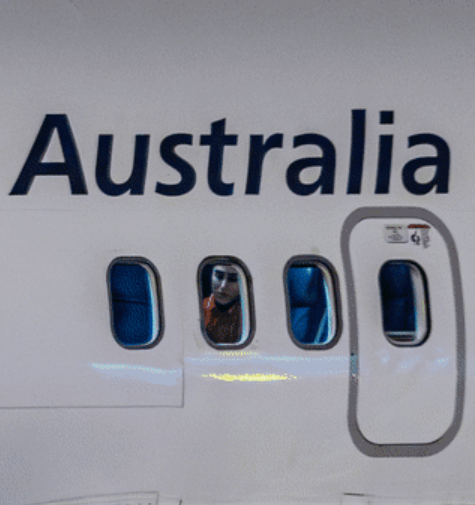
Jon Liedtke joined The Gene Valaitis Show on Niagara’s 610 CKTB to discuss why The 2026 FIFA World Cup is no longer just a sports story and why it’s a “geopolitical stress test” for North America. Following the recent defection of Iranian women’s soccer players in Australia, the tournament is shifting into a “total pressure cooker” that puts Canada directly in the crosshairs. With less than 100 days until kickoff, the “asylum effect” is expected to take hold as players look to cities like Toronto and Vancouver as primary safety valves to escape theocratic regimes, potentially forcing the Canadian government to choose between its human rights brand and its diplomatic relationship with FIFA.
This influx of political tension brings with it a massive logistical and financial burden for host cities. Security is expected to escalate to “siege levels,” resulting in 24/7 surveillance of high-risk teams and significant “border bottlenecks” for fans traveling between cities like Buffalo and Toronto. With Toronto and Vancouver already facing policing price tags exceeding $380 million, Canada’s role as a “protest hub” for the Iranian diaspora could turn every match into a high-stakes referendum on international regimes. As Liedtke warns, Canada may have wanted the world stage to prove its soccer legitimacy, but it is instead getting a front-row seat to a potential mass defection event.
Transcript (Generated by Gemini AI)
Gene Valaitis: It’s Gene Valaitis, a Niagara’s News and Sock, 610 CKTB. Wanna get it off your chest? Well, you can text me at 905-688-2582. We’ve got a lot of great voices on, uh, on my show here, um, but one is a real storyteller, that is Jon Liedtke and he joins me every Tuesday morning, joins you every Tuesday morning as well. Good morning, Jon.
Jon Liedtke: Good morning, Gene, thank you for that.
Gene Valaitis: Oh, absolutely. I mean it too. You know, um, I loved what you were telling me yesterday. We’re talking about the Iranian women’s soccer team and you say it’s not a sports story anymore, it’s a geopolitical stress test for Canada. Um, explain that and, and give us the latest on the story.
Jon Liedtke: Well, for those who might not know, there were five members of the Iranian women’s soccer team who ran away from the IRGC handlers in Australia. And they got, were going to a car park and they had supporters with them trying to get them down, but nobody knew where these women were at that moment. And then the rest of their team stood up as well in support of it. But we had heard that the Australian government was going to deport the team, then there was concerns about them facing repercussion in Iran. But that’s the, the, that’s the gist of it. But with the 2026 FIFA World Cup coming up less than 100 days away, it’s the defection of the Iranian women’s team in Australia that has now dropped a grenade into the lap of the North American host committee. Because if you thought in 2022 the World Cup in Qatar was politically charged, this year is shaking up to be a total pressure cooker and we’re caught literally right in the middle, uh, of it all.
Gene Valaitis: Okay, why does it matter for us?
Jon Liedtke: Well, it’s the asylum effect. We have already positioned ourselves as the stable alternative to the chaos south of the border, with we’ve had reductions, um, but it’s still the over-plying sentiment of what Canadians are about. So with the Trump administration’s hardline immigration stances and travel bans on countries like Iran, Canada now suddenly becomes the primary safety valve. So there’s a risk if Iranian players, men or women, feel unsafe or are labeled traitors during the cup, they won’t look for the US for protection, they’ll look to Toronto and Vancouver for protection.
Gene Valaitis: And the reality?
Jon Liedtke: The reality is what we could end up seeing is a high wave of high profile asylum claims on Canadian soil mid-tournament, putting the Carney government in a really tight spot. Upholding our human rights record and brand, or risking a massive diplomatic fallout with FIFA and the US.
Gene Valaitis: Now what’s the border bottleneck that you refer to?
Jon Liedtke: Well, what we know is that it’s taking place in Canada, the US, and Mexico. So, with players now fleeing team hotels, you have to expect that security all across North America is going to go from high to siege level. Talking about more than just checking passports, Gene, we’re looking at a scenario where every team from a high-risk nation would probably be under 24/7 surveillance by their own minders and local law enforcement. This is a headache for fans traveling between Seattle and Vancouver or Buffalo and Toronto. The defection fear means longer lines, more security, and a likely end to the promised World Cup fast pass at the border.
Gene Valaitis: Hmm. Now, uh, you refer to Canada when we’re talking about this FIFA tournament coming up as the protest hub. What, what does that mean?
Jon Liedtke: Canada has a very large non-regime Iranian community.
Gene Valaitis: Yes.
Jon Liedtke: We saw in Toronto what was it, 600,000 coming out a couple weeks ago?
Gene Valaitis: Yes.
Jon Liedtke: Just absolutely staggering. So because we’re perceived as a safer space for dissidents than the US right now, Toronto and Vancouver are probably going to become global headquarters for anti-regime protests. So if the Iranian men’s team plays North America and the Iranian diaspora in Canada already massively organized, they’ll be turning out at every match and turning it into a referendum on the regime. Now there’s also the cost of policing these high voltage matches that have just skyrocketch, skyrocketed. Toronto and Vancouver are already staring at a massive $380 million plus price tag. The need for defection-proof security and protest management is going to blow these budgets out of the water.
Gene Valaitis: Yeah. You know, I’m concerned about these Iranian women who are heading back to Iran, because not the entire team, uh, was seeking political protection in Australia and even Trump offered them political, uh, protection as well. But how it all got started was during their very first game, they refused to sing the Iranian national anthem as a protest to what has been going on back in the homeland. So I’m, I’m concerned for, for the women who are heading back.
Jon Liedtke: I, I would agree with you. I am making a very bold choice to go back. I mean they either, I don’t know if they’re, what they can expect, we can expect it to be the worst in some cases, we’re in the midst of an international conflict. When they’re gonna get there, how they’re gonna get there, that’s gonna be unfolding. They just put a 72-hour close of airspace for all international flights over Iran, probably seeing that we’re about to see some more massive strikes coming within the next couple days. But, you know, there’s one thing that I really wanted to get to Gene, is this idea of it being a cause for Western feminists and liberals and that gets back to me over and over again. This is a women’s football team collectively staring up to a brutal, theocratic regime. Yeah. They’re risking their lives in this process. It’s the kind of story of extraordinary courage, and it’s one that will maybe one day be told in, you know, just stories over and over again. But where are the protests, Gene? We’ve talked about this before. Where are the massive protests from, I would say the, the Western leftists, your union segments, not from the pro-Iranian and I mean non-regime Iranian community. Where are the protests that we’ve seen for the past two plus years? It is so strange to me that they’re not out there. This is such an easy one for them. Why is activism for them just performative signaling?
Gene Valaitis: Yeah. Uh, back to the soccer. You know, FIFA’s had its problems, just like years ago the Olympic organizing committee had its problems, and when I say its problems I mean corruption. So FIFA always considers itself like the Switzerland of the sports world, we’re, we’re neutral. How do you see them?
Jon Liedtke: Yeah, I mean that’s a pretty good way to label them. Switzerland took the Nazi gold, right?
Gene Valaitis: Yes.
Jon Liedtke: So the bad guys in the story here, I’m sorry, FIFA they’re, they’ve got nothing to defend. When their players are seeking protection from Australian police to avoid being sent back to a war zone, your facade completely crumbles. So really what it is, if Canada, the US, and Mexico can’t guarantee the safety of visiting teams, or conversely, can’t prevent players from using the tournament as an escape hatch, FIFA’s prize, peace prize that Trump gets is actually going to look like a punchline.
Gene Valaitis: Alright. What is the bottom line, when it comes to not just the Iranian women’s soccer team, but FIFA and all the teams that are gonna be in North America, many of which may, uh, seek political asylum?
Jon Liedtke: Canada wanted the world stage to prove that we are a legitimate soccer nation, we’re spending boatloads of money. Instead, we’re getting a front row seat to the most politically volatile sporting event in modern history. We aren’t just hosting a tournament now, we’re hosting a potential mass defection event.
Gene Valaitis: Wow. Jon, you always sum it up beautifully, man. Thank you so much, uh, for this today. Uh, we may be talking to you later on this week, but if not, we’ll do it again next Tuesday morning as always.
Jon Liedtke: Looking forward to it. Cheers.
Gene Valaitis: There he goes, Jon Liedtke. What a great storyteller. He always finds the great angles.
This aired on 610 CKTB
Follow Gene on Twitter or LinkedIn
Leave a Reply